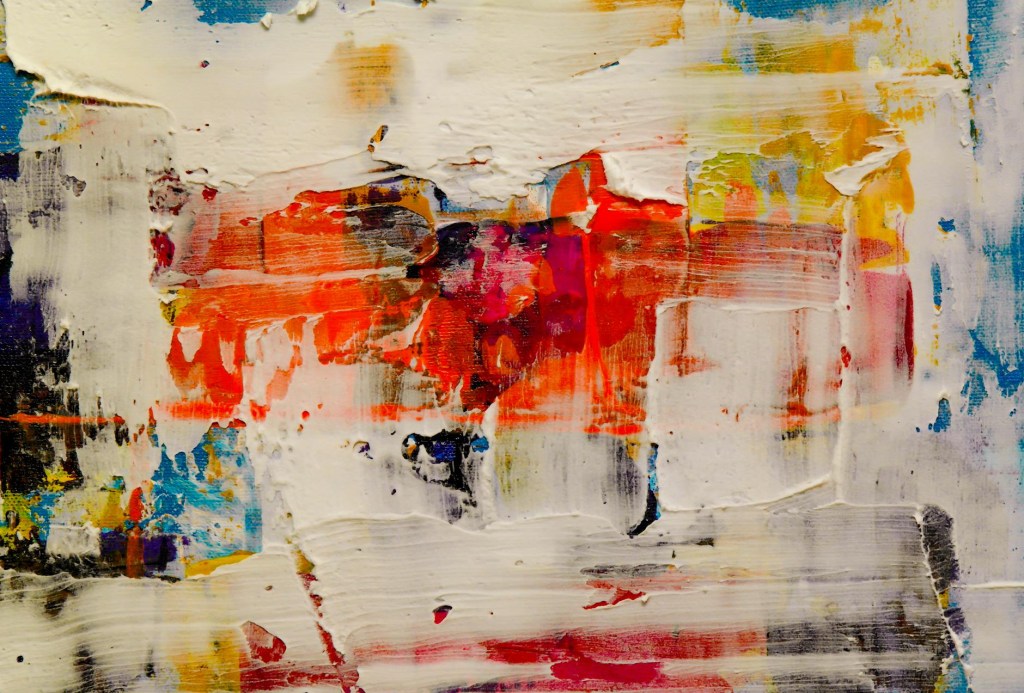
Abstract art is not about what you see—it’s about what you feel. It rejects the literal and embraces the expressive, inviting us to engage with shape, color, texture, and movement in ways that transcend traditional representation. At its heart, abstract art is a visual language of emotion, intuition, and the unseen rhythms of the world.
But what is abstract art, really? And why does it speak so powerfully—sometimes even more than a realistic portrait or landscape?
Let’s wander into the world of the abstract, where ambiguity becomes beauty and the undefined becomes unforgettable.
What Is Abstract Art?
Abstract art does not depict recognizable scenes or objects. Instead, it uses visual elements like lines, forms, and colors to express ideas, sensations, and moods. While it may appear “non-objective,” abstract art is often deeply rooted in reality—filtered, fragmented, or transformed through the artist’s inner world.
It can be geometric or fluid, chaotic or serene. It may burst with color or brood in muted tones. But in all its forms, abstraction challenges us to feel rather than to decipher.
A Brief History of Abstraction
The seeds of abstraction were planted in the late 19th and early 20th centuries as artists like Wassily Kandinsky, Kazimir Malevich, and Hilma af Klint began experimenting with non-representational forms. Inspired by music, spirituality, and new philosophies, they sought to convey the invisible forces of life through shape and hue.
Later movements—like Abstract Expressionism, with artists such as Jackson Pollock, Mark Rothko, and Joan Mitchell—embraced the emotional and performative aspects of painting. Here, the brushstroke became a heartbeat; the canvas, a confession.
Today, abstract art continues to evolve, embracing digital tools, mixed media, and global influences.
Why We Love (and Sometimes Struggle With) Abstract Art
Abstract art can be disorienting. There’s no obvious narrative, no familiar form to cling to. It asks you to slow down, to look with your heart instead of at the subject.
That’s also what makes it so powerful.
Abstract art is an invitation. An invitation to:
• Interpret freely.
• Respond emotionally.
• Project your own experiences onto the canvas.
Where realism tells a story, abstraction asks a question. It evokes rather than defines. It creates space—for reflection, emotion, and sometimes even discomfort.
Elements of the Abstract: Tools of the Intangible
So how does one create abstraction?
1. Color
Color in abstract art is rarely decorative. It’s expressive. A wash of crimson can scream; a haze of blue can mourn. Artists use color to signal emotion, create energy, or construct tension.
2. Shape & Form
Circles, grids, jagged edges, amorphous blobs—shapes in abstraction can represent anything or nothing. They become stand-ins for movement, breath, or atmosphere.
3. Line
Lines may divide or connect, rush or linger. They can create rhythm like notes on a staff. A single gestural line might say more than a paragraph of description.
4. Texture
In mixed media or layered paint, texture adds a tactile presence. It engages the body as well as the eye. A rough, scarred surface may suggest trauma or erosion. A glossy, smooth finish might evoke calm or artificiality.
5. Space
The arrangement of elements—what is crowded, what is sparse—creates balance or imbalance. Negative space becomes as crucial as form.
How to Experience Abstract Art
Don’t rush it. Stand back. Get close. Let your eyes move across the surface.
Ask yourself:
• What do I feel when I look at this?
• What memories or sensations does this bring up?
• Is there tension? Calm? Chaos?
You don’t need to “get it.” You only need to engage with it. Abstract art is less about understanding and more about experiencing.
Creating Abstract Art: Expression Without Expectation
For artists, abstraction can be a form of freedom—a rebellion against perfectionism, a dance with the unknown. It requires trust: in process, in spontaneity, in silence.
Start with a single brushstroke. A feeling. A color. Let the piece evolve. Let it speak back.
There’s no formula. Only exploration.
Final Thoughts: The Beauty of the Unnamed
In a world crowded with images and messages, abstract art offers space—room for ambiguity, for silence, for emotional truth that can’t always be spoken. It asks us to let go of control and simply be with it.
It is a mirror that reflects not what we look like, but how we feel inside.
And sometimes, that’s the clearest picture of all.
 agantz art