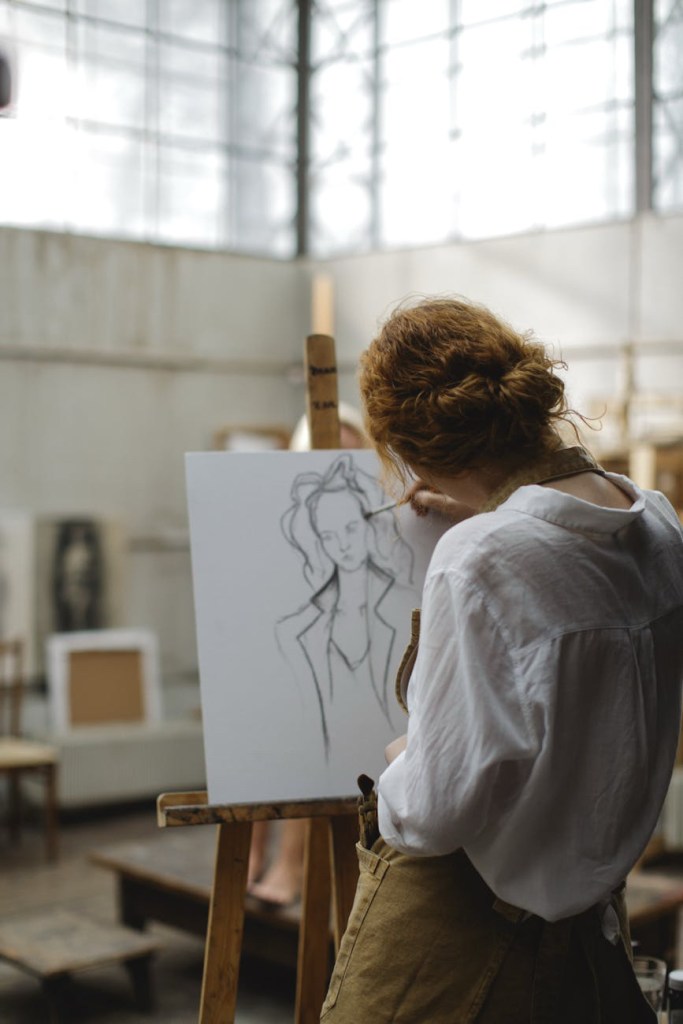
Whether you’re applying to an art school, submitting work for a gallery show, or simply wanting to present your art in a professional and cohesive way, building your first portfolio can be an exciting (and slightly intimidating) step. But here’s the truth: your portfolio isn’t just a collection of your best work—it’s a story. It’s your visual voice. It’s the beginning of how the world will come to know you as an artist.
This guide will walk you through the process step-by-step, from choosing your strongest pieces to formatting and presenting them with confidence.
Step 1: Know Your Purpose and Audience
Before you start curating, ask yourself:
Why am I creating this portfolio? Who will be reviewing it?
An art school admissions officer might be looking for technical range and growth potential. A gallery curator might want originality and a consistent artistic voice. A client may be more interested in your style or medium. Defining the purpose will guide your selection and presentation style.
Tip: Tailor your portfolio to the opportunity. You can have multiple versions for different audiences.
Step 2: Curate Thoughtfully—Quality Over Quantity
Resist the urge to include everything you’ve ever made. A strong portfolio typically includes 10–20 curated pieces. Choose work that represents:
Your technical skills and craftsmanship Your conceptual depth or creative vision A variety of media, perspectives, or subject matter (unless focusing on a specific style) Your most recent and refined work
Tip: When in doubt, leave it out. It’s better to have fewer strong pieces than to dilute your portfolio with works you’re unsure about.
Step 3: Show a Range, But Keep a Cohesive Voice
While you want to show your versatility, your portfolio should still feel like it was created by one artist—you. Find a balance between variety and consistency.
Consider including:
A few figurative pieces Abstract or conceptual work Pieces that show exploration (e.g. process sketches, experiments) One or two personal or expressive works
Tip: Think like a storyteller. Can the viewer see your creative journey unfold from beginning to end?
Step 4: Include Process and Conceptual Work
Many curators, instructors, and collaborators want to see how you think, not just how you execute. Include:
Sketchbook pages Developmental drawings Notes, mood boards, or inspiration sources
This gives insight into your problem-solving skills and creative process.
Tip: If possible, scan or photograph your process work with good lighting. Label or describe the progression briefly.
Step 5: Write Clear, Insightful Descriptions
For each piece, prepare:
Title Medium Size Year Brief description (optional): What is the piece about? What techniques or inspirations did you use?
Tip: Keep your writing concise but meaningful. Avoid over-explaining—let the art speak—but give enough context to show intention.
Step 6: Document Your Work Professionally
Presentation matters. Even if your work is excellent, poorly lit or pixelated photos will lower its impact.
Best practices:
Use natural light or a lightbox Crop out background distractions Use a neutral backdrop Edit for color accuracy (without over-filtering)
If you’re submitting digitally, make sure images are high-resolution (300 dpi for print, 72 dpi for web), properly labeled, and consistent in size and format.
Step 7: Format for Clarity and Ease of Navigation
You can present your portfolio in several ways, depending on the context:
Physical portfolio: Use a professional portfolio binder with high-quality printed images. Organize by theme or chronology. Digital PDF: Clean layout, no clutter. Include a cover page, table of contents, and contact info. Online portfolio: Use platforms like Squarespace, Wix, Adobe Portfolio, or Behance. Make navigation intuitive.
Tip: Name your files clearly (e.g., “Lastname_Title_2025.jpg”). Keep your formatting minimal, clean, and consistent.
Step 8: Write a Strong Artist Statement
This is your chance to connect with your audience on a personal and philosophical level.
A good artist statement includes:
Your artistic focus and themes Your influences Why you create What you want viewers to take away
Tip: Keep it between 100–300 words. Be authentic and avoid jargon. Speak from the heart.
Step 9: Ask for Feedback and Revise
Before submitting or sharing your portfolio, seek feedback from trusted mentors, fellow artists, or professionals. Ask:
Which pieces stand out most? Does the sequence flow? Is your voice coming through?
Tip: Be open to critique. Revision is part of the artistic process.
Step 10: Keep It Alive
Your portfolio is not a static object—it evolves as you grow. Schedule time every 6–12 months to update it with new work, remove old pieces, and reflect on your progress.
Final Thoughts: You Are More Than Your Portfolio
Building your first portfolio is a milestone worth celebrating. But remember: the portfolio is not the end goal—it’s a reflection of your journey, a window into your evolving self. Be proud of your growth. Be bold in your expression. And above all, keep making.
You’ve got something to say. Show the world who you are.
Are you building your first portfolio and need guidance or feedback? Leave a comment or get in touch—I’d love to support you on your journey.
 agantz art