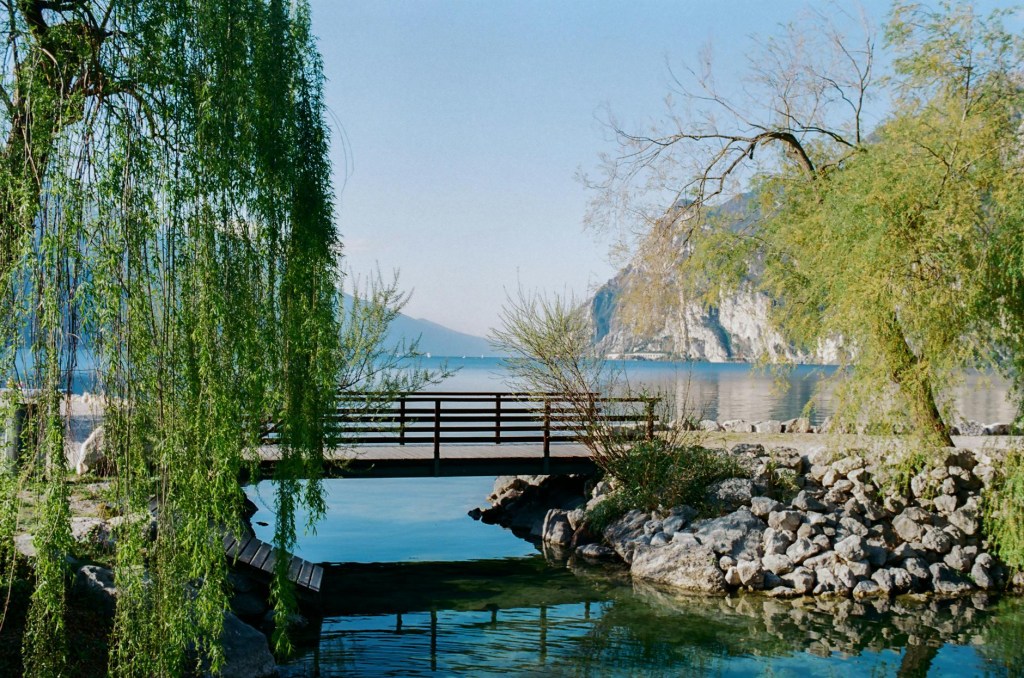
The willow tree in Caleb’s painting looked like it was drowning in its own sorrow. The brush trembled in his fingers, heavy with too much sap green and not enough conviction. He sat beneath the crumbling stone archway in Marigold Park, where the past clung to the air like ivy to brick, and time unraveled in the hush between birdsong and breeze.
It was here he and Corin had played as children—turning the arch into a castle, a prison, a portal. It had been everything but what it truly was: the backdrop to the most enduring friendship of his life, and now, the resting place of its shadow.
The canvas on his easel was smeared and stiff with dried emotion. He hadn’t painted since the fire. Four months of silence, of shifting through ashes both real and metaphorical. Corin’s apartment had gone up in flames, taking with it the laughter, the secrets, the voice he still half-expected to hear on his voicemail.
Caleb blinked against the sting in his eyes. “You always said the willow looked like a woman crying in church,” he murmured. “I thought that was morbid. But I get it now.”
A gust of wind teased at his sketchbook, flipping it open to a charcoal drawing of Corin at sixteen—bare feet on the park bench, sketchpad in lap, hair coiled like wild vines. Always barefoot in summer, even after she’d stepped on a bee and limped for a week.
Flashback.
“You’re so dramatic,” Caleb had said as she soaked her swollen foot in the fountain.
“I’m a painter,” she replied. “Tragedy is my medium.”
“You’re also an idiot.”
“I contain multitudes.”
The memory lifted a breath of laughter from his chest, too fragile to last. The air was thick with honeysuckle and the whisper of June cicadas. Marigold Park was in full bloom, and yet, everything felt dust-colored.
Then—
“Your willow’s a little… depressed,” came a voice from behind him. Feminine, wry.
Caleb startled, dragging his eyes from the canvas.
A woman stood a few paces away, holding a sketchpad under one arm and a half-eaten croissant in the other. She wore overalls splattered with ochre, her hair piled high and unruly like she’d just rolled out of a bed made of paint tubes.
“It’s grieving,” Caleb replied, almost apologetically. “Or melting. I’m not sure yet.”
She smiled. “You’re either a tortured genius or someone who’s had a really bad morning.”
“Bit of both,” he admitted. “I’m Caleb.”
“Nora.” She stepped closer. “Forensic illustrator by day. Duck enthusiast by early afternoon.”
He glanced at her pad. A series of ducks waddled in various moods—disdainful, panicked, surprisingly seductive. Each was labeled. Gordon. Frida. The Unforgiven.
He laughed. “I like Unforgiven. She’s got a vendetta.”
“She pecked a toddler,” Nora said solemnly. “Twice.”
They fell into easy conversation—two artists from opposite ends of the spectrum, finding mutual comfort in the absurd. Caleb couldn’t remember the last time he smiled without guilt tagging along behind it.
They spoke of mediums and methods, of odd commissions and strange clients. She told him about drawing skulls for unsolved cases. He spoke vaguely of gallery shows he never submitted to.
Then, as the shadows stretched across the lawn and the cicadas grew bolder, she asked softly, “Do you always paint here?”
“No,” Caleb said. “Only when I need to talk to someone who’s gone.”
A beat.
“Your willow,” she said.
He nodded. “It was Corin’s favorite tree. She—my best friend. She died in a house fire. Her building had faulty wiring. No one got out.”
“I’m sorry.”
“I’m not sure I believe it,” he said. “That she’s gone. She was… the kind of person who felt like a permanent feature in your life.”
They sat in silence again. But this time, it wasn’t easy. It was the kind of silence that weighs the soul down like wet wool.
Then Caleb stiffened.
A shadow moved near the archway. Not just wind, not imagination. A person. He caught only a flicker—shoulders, stride, something achingly familiar.
He stood, heart thudding. “Did you see that?”
Nora turned. “See what?”
“There was someone. By the arch.”
“There’s no one there now.”
He moved quickly, abandoning his paints and palette. The stone arch loomed as it always had, indifferent and immovable. But just beyond its base, something glinted between the moss and mortar.
He crouched and pulled it free—a corner of canvas, half-burned but intact enough to see what it had once been.
A weeping willow. Vibrant and moody.
And beneath it, a garish pink flamingo, absurd and glorious.
He turned it over.
Charcoal handwriting, scrawled in a rush:
“Paint it loud, Caleb. See you soon. —C.”
The world tilted.
Behind him, Nora called out, “Everything alright?”
Caleb stood slowly, clutching the fragment to his chest.
“I don’t think she died in that fire,” he whispered.
 agantz art